


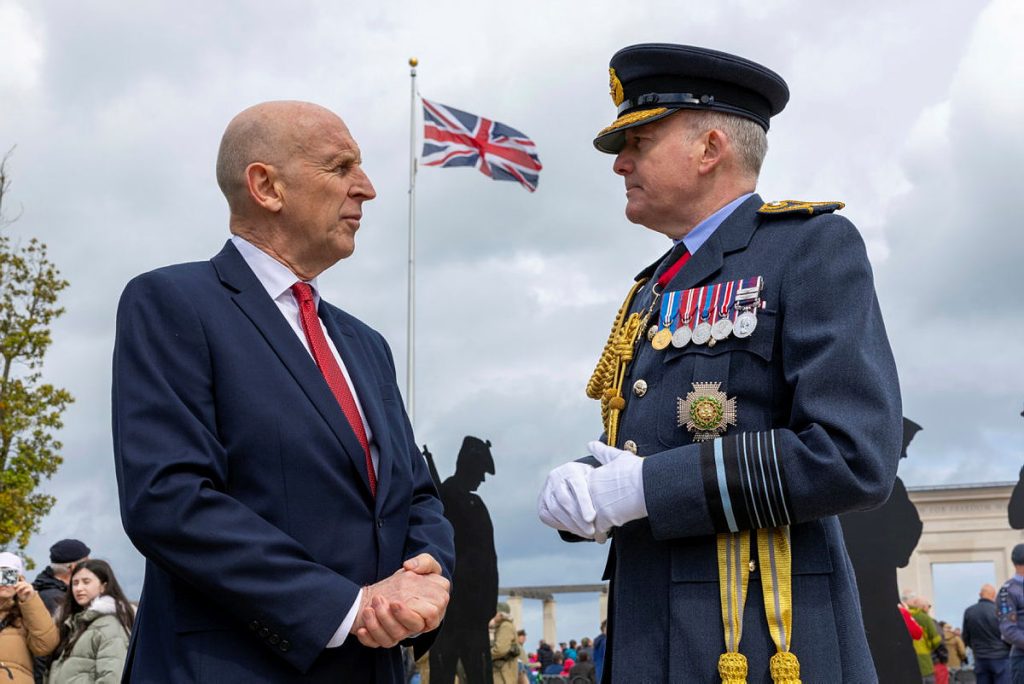
Former Defence Secretary John Healey has warned that Britain will still not be spending enough on defence despite Sir Keir Starmer announcing an extra £15 billion for the armed forces.
The intervention came as the Prime Minister unveiled his long-awaited Defence Investment Plan on Tuesday, one of the final major policy announcements before his departure from Downing Street.
Mr Healey, who resigned earlier this month following disagreements over military spending, said the new funding package was welcome but still failed to meet the level of investment many defence experts believe is necessary.
He said:
“Today is the next down-payment for defence. It builds on the record defence investment Labour in government has already made.
“But Britain will still be spending just 2.7 per cent of GDP in 2030, the date when Nato has warned we could face a Russian attack.”
Mr Healey left the Cabinet after reportedly becoming frustrated by what he saw as a lack of urgency from both No 10 and the Treasury in increasing defence spending. At the time, he said the Prime Minister was “unable” and the Treasury was “unwilling” to commit the resources needed to properly strengthen Britain’s armed forces.
The package announced this week is larger than the £13.5 billion increase that had previously been under discussion before Mr Healey’s resignation. Following further negotiations between the Treasury and Defence Secretary Dan Jarvis, the figure was increased to £15 billion.
The Defence Investment Plan will see billions of pounds invested in new military technology, ammunition production, cyber security and Britain’s nuclear deterrent over the coming years.
A major element of the package is a £5 billion commitment to drones and autonomous weapons systems, reflecting the growing role such technology has played during the war in Ukraine. Defence officials say future conflicts are likely to rely increasingly on artificial intelligence, unmanned aircraft and advanced battlefield technology.
The Government says the overall package will increase annual defence spending to almost £80 billion by the end of the decade, taking spending to around 2.7 per cent of national economic output by 2030.
Sir Keir has argued that the investment is necessary because the world has become a more dangerous place, with ongoing conflict in Ukraine, growing geopolitical tensions and increased threats from hostile states.
However, questions remain about whether the level of spending will be sufficient.
Mr Healey used his intervention to urge Andy Burnham, who is widely regarded as the favourite to succeed Sir Keir as Labour leader and Prime Minister, to commit to increasing defence spending further.
He called on Mr Burnham to set out a timetable for reaching 3 per cent of GDP on defence and to provide what he described as a “clear, credible funding plan” to meet Nato’s target of spending 3.5 per cent of GDP by 2035.
The issue has become increasingly important across Europe since Russia’s invasion of Ukraine in 2022.
At the recent Nato summit, alliance members reaffirmed their commitment to increasing defence spending as concerns continue over the future security of Europe and the growing threat posed by hostile states.
Several of Britain’s allies are already planning to spend considerably more on defence than the UK.
Germany is expected to spend around 3.7 per cent of GDP on defence by 2030 following a major expansion of its armed forces, while Poland is already spending more than 4 per cent of GDP. Sweden has also committed to reaching 3.5 per cent by the end of the decade.
Military experts have repeatedly warned that Britain’s armed forces face significant challenges after years of budget pressures and reductions in personnel.
The British Army currently has around 70,000 trained regular soldiers, making it the smallest standing army the country has maintained for centuries. Concerns have also been raised about stockpiles of ammunition, military equipment and the pace at which new capabilities can be brought into service.
The Government insists the new investment plan marks the biggest sustained increase in defence spending since the end of the Cold War and represents a major step towards rebuilding Britain’s military strength.
Ministers have said the money will be focused on modernising the armed forces and ensuring they are equipped to deal with future threats, including cyber attacks, drone warfare and other emerging technologies.
Funding for the package is expected to come largely through reallocating existing government spending rather than additional borrowing, although details of how all the commitments will be financed are still emerging.
For Sir Keir, the announcement is likely to form a significant part of his legacy in office. However, Mr Healey’s comments underline a debate that is unlikely to disappear any time soon: whether Britain is investing quickly enough in its national security at a time of growing international uncertainty.
With Labour preparing for a leadership transition and defence now firmly back at the centre of political debate, pressure is likely to remain on ministers to demonstrate that the UK’s armed forces have the resources they need to meet future challenges.