


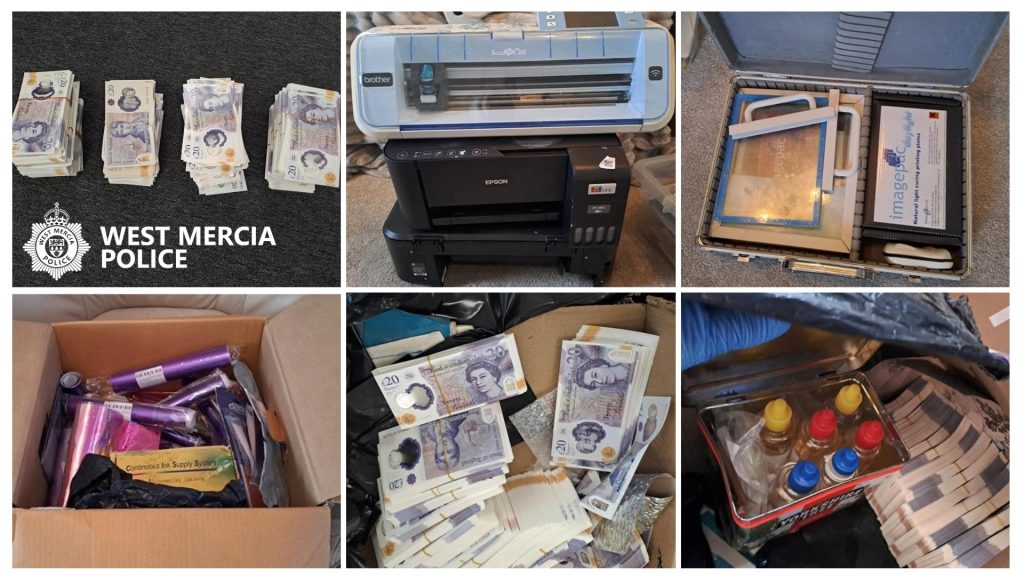
A MAN has been arrested after more than £100,000 in counterfeit cash was found at a property in Kidderminster.
The 42-year-old was held on Saturday on suspicion of supplying fake notes. It followed intelligence work relating to the sale of counterfeit cash on eBay.
Officers attended the address on Goldthorn Road where they discovered more than £100,000 in forged £20 notes, along with equipment and tools used to manufacture the fake currency.
The arrested man has since been released under investigation as enquiries continue.
The discovery has prompted police to remind people to check notes in their possession to make sure they are not counterfeit.
Officers are also warning anyone caught in criminal activity like this they face the prospect of receiving a criminal record, a potential prison sentence and having their assets confiscated.
Det Sgt Matt Robinson from North Worcestershire’s Reactive CID said: “An investigation is ongoing and we are using this case to remind the public not to fall foul of forged cash.”
He urged people to learn how to check bank notes they receive and added, if they found any, to report the matter to the police.
Neil Harris, head of the National Counterfeit Currency Unit at the National Crime Agency (NCA), said: “Bank notes sold online and marketed on social media as ‘prop notes’ are counterfeit and to possess, sell or use them as payment is a criminal offence.
“We see foil stickers added to these counterfeit notes to conceal the ‘prop notes’ text, and these foil stickers are also illegal to possess, buy or sell.
“In some cases, the supply of counterfeit notes has been linked to organised crime groups.”
He added the UK’s National Counterfeit Currency Unit in the NCA worked closely with online selling sites and social media platforms to prevent adverts for counterfeit currency being created or – if they did go live – to get them removed.
He said there were simple checks people could make to identify a counterfeit bank note – by checking the holographic foil strip. On a genuine note the wording in this strip will change from the value of the note to ‘pounds’, for example from ‘twenty’ to ‘pounds’, but on a counterfeit note, this word is fixed.
He said the name of the bank could also be checked – on a genuine note this wording will be raised but a counterfeit one will be smooth to touch.
People can visit: bankofengland.co.uk/banknotes to find out how to check their bank notes.